

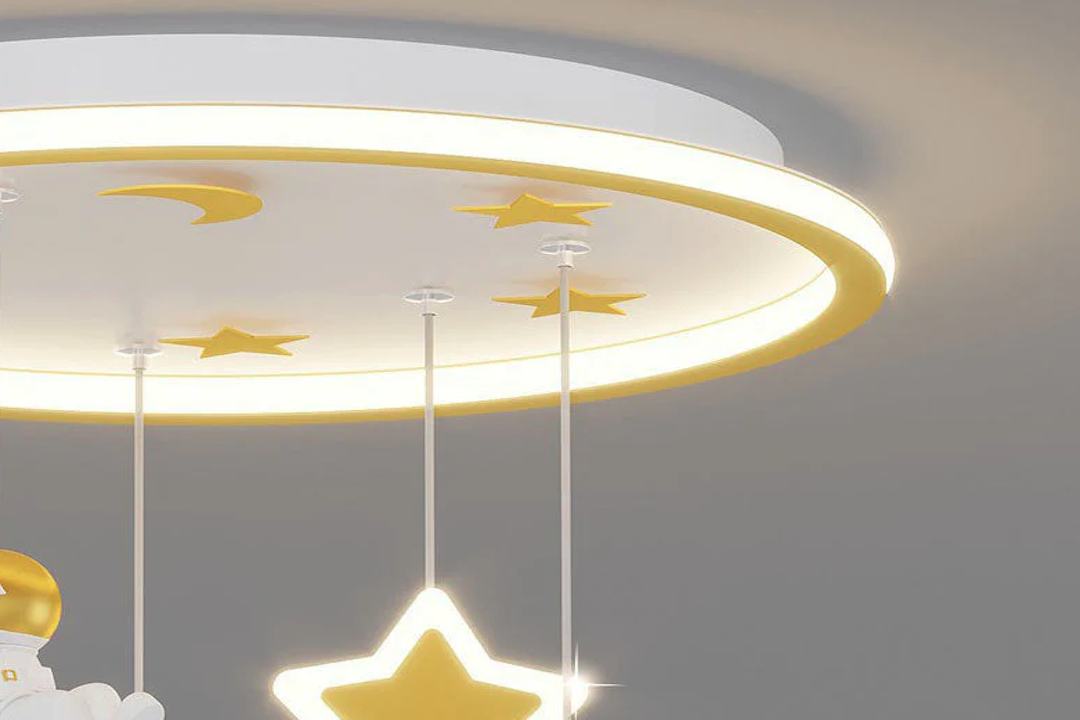
The main question for many parents considering a “Starry Nights” kids’ room pendant light is whether it’s a practical choice for their child’s space. The short answer is yes, it can be a wonderful addition, offering a calming ambiance, a touch of wonder, and serving as a functional light source. However, its suitability depends on a few key considerations, from the type of “starry nights” effect you’re looking for to the overall practicality for a child’s room.
Essentially, “Starry Nights” pendant lights Scules are designed to mimic the appearance of a starry sky. This is usually achieved through a few different methods, and understanding these variations is crucial when making a choice.
Projection-Based Lights
These lights use a lens or a series of small holes to project points of light onto the ceiling and walls.
- How they work: Often, these lights have a rotating element or a bright LED that shines through a patterned disc or globe. The patterns can range from simple dots to more intricate nebulae or even constellations.
- Pros: They can create a dynamic and immersive experience, with moving “stars” or shifting colors that can be quite captivating for children.
- Cons: The projection quality can vary significantly. Some cheaper models might produce blurry or uneven light, making the effect less convincing. They might also be too bright for a child who needs very low light to sleep.
LED Array Lights
These lights feature a multitude of small LEDs embedded within the fixture itself or behind a translucent diffuser.
- How they work: Instead of projecting, these lights create the starry effect by illuminating numerous tiny dots, often in different shades of white or blue, directly from the fixture.
- Pros: They offer a more consistent and often softer glow. The uniformity of the lights can feel more like a gentle, diffused starlight. They are generally good for ambient lighting and can be less distracting for sleep.
- Cons: The effect can be static, meaning the “stars” don’t move. The overall visual impact might be less dramatic than projection lights.
Fabric or Acrylic Diffuser Lights
These lights use a fabric or acrylic shade with small cutouts or embedded glitter-like elements.
- How they work: Light passes through a patterned shade, creating small points of light. Think of it like a stained-glass window effect but for stars.
- Pros: These can be very aesthetically pleasing and come in a wide range of designs. They tend to offer a softer, more decorative glow.
- Cons: The “starry” effect is usually subtle and less direct than projection methods. The depth of the effect is limited to the surface of the shade.
Practicality in a Child’s Room
Beyond the aesthetics, how well does a “Starry Nights” pendant light actually function in a kid’s room? This is where practical considerations come into play.
Brightness and Dimming Capabilities
A key factor is how bright the light is and whether it can be adjusted.
- For bedtime routines: Many parents want a dimmable light for winding down. A light that starts too bright can actually hinder sleep. Look for options with a decent dimming range.
- As a main light source: If the “starry nights” light is intended to be the primary light in the room, ensure it provides enough lumens for activities like reading or playing. Often, these decorative lights might need to be supplemented with other task lighting.
- Consider the projection intensity: If you opt for a projector, assess how strong the light beam is. Some can be quite intense and might be too stimulating for sensitive children.
Durability and Safety
Children’s rooms are often dynamic environments. Safety and durability are paramount.
- Material considerations: Are there any exposed bulbs or fragile parts? Many “Starry Nights” lights use LEDs, which are generally safer as they don’t get as hot as traditional bulbs.
- Hanging mechanisms: Ensure the pendant light is securely installed. Children can sometimes reach or pull on hanging objects, so a robust mounting system is important.
- Child-friendly designs: Some designs might have sharp edges or small, detachable parts. Opt for rounded edges and sturdy construction. If it’s a projector light, ensure it’s not placed where a child might accidentally touch the hot lens.
Installation and Maintenance
Getting the light up and keeping it working is part of the practicality.
- Professional installation: As with any ceiling fixture, professional installation is often recommended, especially if you’re not comfortable with electrical work.
- Bulb replacement: If your light uses specific LED modules that aren’t easily replaceable, consider the lifespan of the unit and what happens if one part fails. Integrated LED lights, while often more energy-efficient, can be an issue if the entire unit needs replacing due to a single faulty LED.
- Cleaning: How easy is the fixture to clean? Dust and small fingerprints can accumulate, so a design that’s simple to wipe down is beneficial.
Choosing the Right “Starry Nights” Effect
The “starry” effect itself can be so varied. It’s not just about points of light; it’s about the kind of starry sky you want.
The “Calming Glow” Effect
This is often what parents are looking for when they think of a gentle, sleep-inducing ambiance.
- Soft, diffused light: This usually comes from LED array lights or diffuser types. The goal is a gentle shimmer rather than distinct projections.
- Subtle movement: Some lights offer a very slow, almost imperceptible shimmer or twinkle, which can be more soothing than rapid movement.
- Color temperature: Warm white or soft blue tones are generally more conducive to relaxation and sleep than harsh white or cool blue light.
The “Interactive Wonder” Effect
This type of light is more about engagement and sparking a child’s imagination.
- Projection and movement: Many projector lights fall into this category. Rotating elements, shifting colors, or even images of nebulae can create a more dynamic and exciting experience.
- Adjustable features: Lights that allow you to control the speed of rotation, the brightness of the projection, or even switch between different patterns can cater to different moods and energy levels.
- Potential for overstimulation: It’s worth noting that for some children, especially those prone to overstimulation, these more dynamic effects might be too much, particularly close to bedtime.
The “Educational Constellation” Effect
For the budding astronomer, some lights go a step further.
- Accurate constellations: Certain higher-end “Starry Nights” lights are designed to accurately depict specific constellations.
- Educational value: This can be a fun way to introduce children to astronomy, encouraging them to learn about the night sky.
- Limited scope: The focus here is on educational accuracy, so the visual effect might be less about general “starlight” and more about identifiable star patterns.
Integrating with Room Aesthetics
A “Starry Nights” pendant light shouldn’t just be functional; it should also complement the overall look and feel of the child’s room.
Color Palette and Design Scheme
Think about the existing colors and themes in the room.
- Complementary colors: If the room is decorated with blues and purples, a starry light in those tones can enhance the theme. For a more neutral room, a white or silver fixture can act as a subtle accent.
- Modern vs. whimsical: “Starry Nights” lights come in very modern, minimalist designs as well as those with more whimsical, playful shapes. Choose one that aligns with the room’s overall style.
- Fixture material: The material of the fixture (metal, acrylic, fabric) can also influence the aesthetic. A sleek metal fixture might suit a modern room, while a fabric-covered one could lend a softer touch.
Ceiling Height and Room Size
These are practical, but often overlooked, considerations.
- Fixture size: A large, statement pendant light might overwhelm a small room, while a tiny one could get lost in a larger space.
- Hanging distance: For rooms with lower ceilings, ensure the pendant light doesn’t hang too low, posing a visual obstruction or a potential bump hazard. Adjustable drop lengths are very helpful here.
- Projection coverage: If you’re using a projection-style light, consider the size of the room. The light might not effectively cover a very large ceiling, or it might be too concentrated in a small space.
Beyond the “Starry Nights” Effect: Other Features to Consider
When you’re looking at “Starry Nights” pendant lights, don’t forget to evaluate other functional aspects you’d expect from any light fixture.
Smart Home Integration
Increasingly, lights are becoming “smart.”
- App control: Can you control the light via a smartphone app? This allows for remote on/off, dimming, and color changes, which can be incredibly convenient.
- Voice control: Compatibility with voice assistants like Alexa or Google Assistant offers hands-free operation, perfect for when you’re holding a sleeping child.
- Scheduling: Setting a schedule for the light to turn on or off automatically can help establish bedtime routines without constant manual intervention.
Multiple Lighting Modes
Some lights offer more than just the “starry” effect.
- Standard light function: Does the light also function as a regular, bright light? This is crucial if it’s intended to be the primary light source for playing or reading.
- Color-changing options: Beyond the starry effect, are there options to change the color of the main light or the projected stars? This adds versatility.
- Combination modes: Some lights might have a dim, ambient “starry” mode that exists alongside a brighter, more functional light setting.
Energy Efficiency
Modern LED lights are inherently energy-efficient, but it’s still worth noting.
- LED lifespan: While replacing whole units can be a drawback (as mentioned earlier), the individual LEDs in most modern “Starry Nights” lights have a very long lifespan.
- Power consumption: For lights that are left on for extended periods (e.g., as a night light), choosing a model with low power consumption is a practical and eco-friendly decision.
Ultimately, a “Starry Nights” kids’ room pendant light can be a delightful and functional addition. By carefully considering the type of starry effect, its practical features like brightness and safety, and how it fits into the room’s overall design, you can choose a light that will bring a touch of magic to your child’s space without compromising on usability.